


India’s First Two-Way Tele-Robotic Surgery: A New Era in Healthcare
India has taken a significant leap into the future of medicine with the successful execution of its first two-way tele-robotic surgery. This breakthrough not only showcases the country’s growing technological prowess but also signals a transformative shift in how surgical care can be delivered—especially in a nation where access to advanced healthcare is often uneven.
What is Two-Way Tele-Robotic Surgery?
Tele-robotic surgery allows a surgeon to perform procedures on a patient from a distant location using robotic systems. The “two-way” aspect adds a critical layer: real-time interaction between the surgeon and robotic system with feedback mechanisms such as tactile sensation, high-definition visuals, and instant response controls. In simpler terms, it feels almost as if the surgeon is physically present in the operating room—even when miles away.
The Historic Milestone
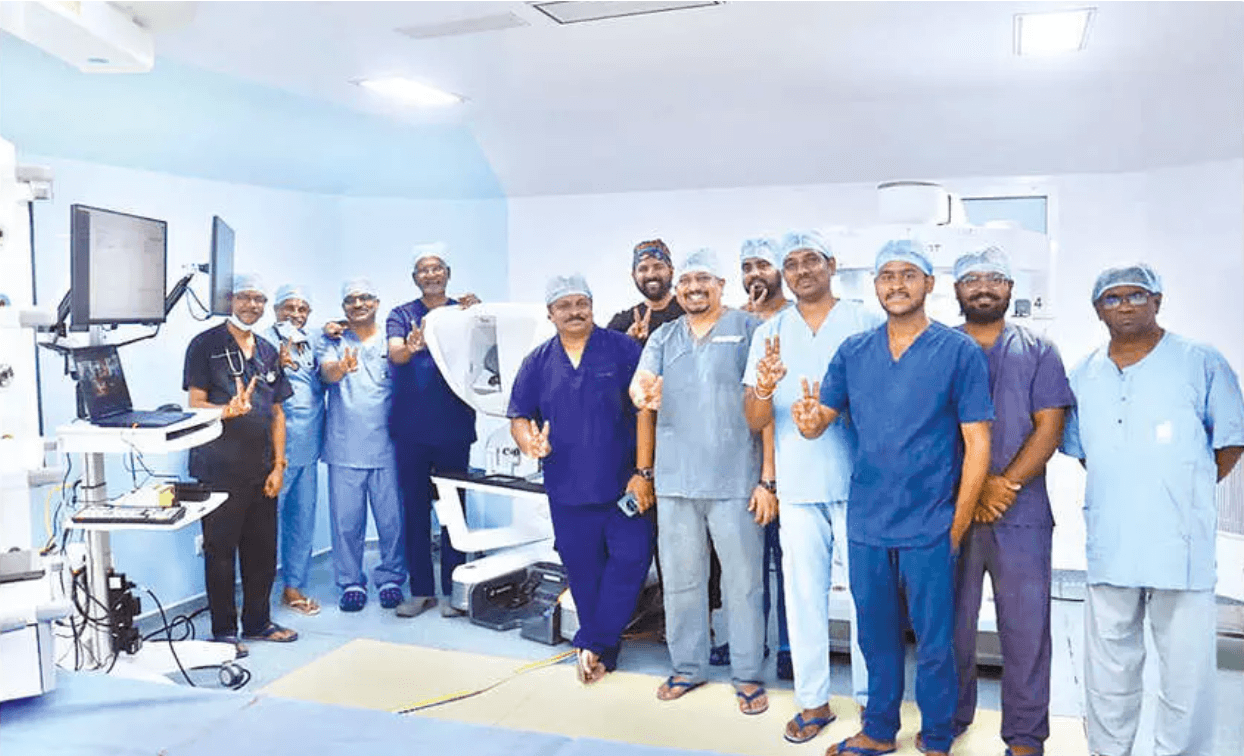
In this landmark achievement, a surgeon operated remotely on a patient located in a different city using a robotic interface connected through a high-speed, low-latency network. The system ensured seamless communication, precision movements, and immediate feedback, making the procedure safe and effective.
What makes this particularly remarkable is the reliability of the connection. Surgical procedures demand near-zero delay and absolute accuracy—something that was once considered nearly impossible over long distances.
Why This Matters
India faces a significant challenge: a shortage of specialized surgeons in rural and remote areas. Most advanced medical expertise is concentrated in metropolitan cities, leaving millions without timely access to critical care.
This innovation changes that dynamic:
Access to Expertise Anywhere: Top surgeons can now operate on patients across the country without needing to travel.
Reduced Costs and Delays: Patients save time and money by avoiding long-distance travel.
Emergency Readiness: Critical procedures can be performed faster, potentially saving lives in time-sensitive situations.
Skill Sharing: Surgeons can collaborate in real-time, enhancing learning and improving outcomes.
Technology Behind the Breakthrough
The success of two-way tele-robotic surgery depends on a combination of advanced technologies:
Robotic surgical systems capable of precise, minimally invasive movements
High-speed communication networks (such as 5G or dedicated fiber links)
Real-time video and haptic feedback systems
AI-assisted controls for enhanced precision and safety
Together, these create a synchronized ecosystem where distance becomes almost irrelevant.
Challenges Ahead
While this achievement is impressive, scaling it nationwide will require overcoming several hurdles:
Infrastructure gaps, especially in rural areas
High setup and maintenance costs
Regulatory and legal frameworks for remote surgeries
Training for surgeons and support staff
Addressing these challenges will be key to making this technology widely accessible.
The Road Ahead
India’s success in two-way tele-robotic surgery is more than a technological milestone—it’s a glimpse into the future of healthcare. As connectivity improves and costs gradually decrease, this approach could redefine surgical care not just in India, but globally.
Imagine a world where geography no longer limits access to life-saving procedures. That future is no longer distant—it has already begun.